
Ship Supplier and Ship Chandler Serving U.S. Ports
Provisions, deck and engine stores, technical supplies and marine spare parts for container ships and other vessels calling at the Port of Oakland and San Francisco Bay anchorages.
Oakland port ship supply is mostly about timing. The port is a major container gateway for Northern California, and most calls are liner services working to fixed berth windows at the Outer and Middle Harbor terminals. Alpha Ship Supplies quotes and coordinates Oakland requisitions from our Houston headquarters, with delivery arranged for each call, so your stores are confirmed, packed and cleared for the terminal gate before the ship is alongside.
Houston-managed West Coast supply | Outer Harbor · Middle Harbor · Bay Anchorages | One Quote, One Delivery
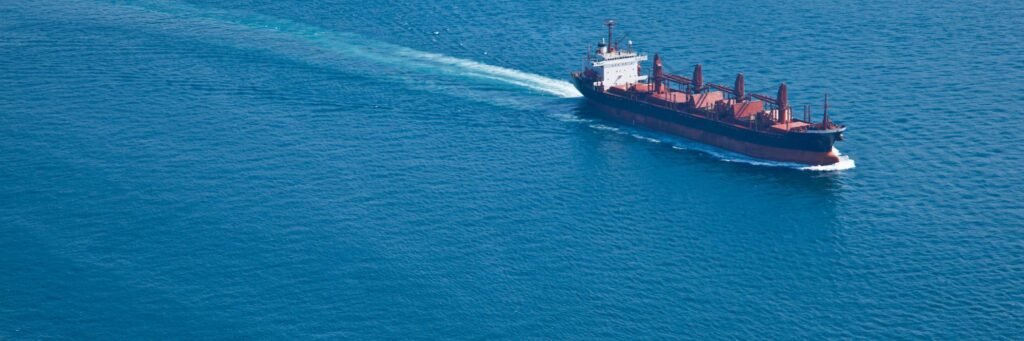
Stores ready before the ship arrives
Provisions, stores and spares together
Coordinated with your next West Coast call
Prioritized by your vessel ETD
Container ships at Oakland usually spend less than a day or two alongside. There is little time to chase a missing pallet or re-book a gate slot, so the work has to be done before arrival: lines confirmed, substitutes agreed, gate paperwork ready and the delivery booked inside the berth window. That is how we run every Oakland call.
Liner operators and ship managers use Alpha Ship Supplies for San Francisco Bay because:
Because we coordinate West Coast calls regularly, we know how Bay Area traffic, terminal gate queues and driver credential checks affect delivery times, and we build that into the slot we book.
Send the vessel name, terminal, berth window and requisition. We confirm a delivery slot with your agent.
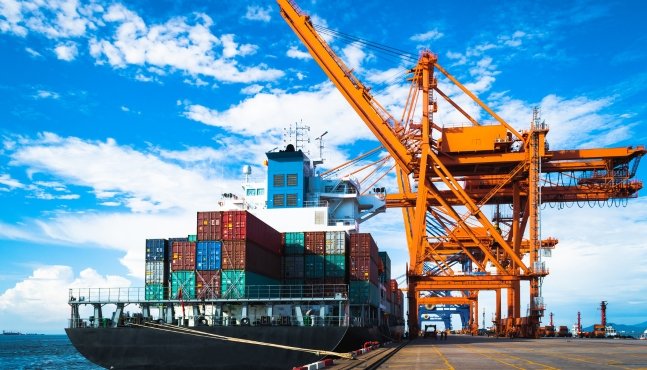
The Port of Oakland sits on the east side of San Francisco Bay, opposite the city of San Francisco. Its container terminals in the Outer Harbor and Middle Harbor handle most of the deep-sea traffic, while ships waiting for a berth use anchorages in the bay. We support vessels at:
Tell us the terminal and berth window with the requisition. It decides the delivery time, the gate paperwork and how much room there is for late additions.
Transpacific container ships arriving from Asia make up most Oakland calls, and their requisitions typically mix fresh provisions, cabin stores, paint and engine-room consumables. Feeder and coastal container services calling on short rotations need small, quick top-up orders. Ro-Ro and vehicle carriers and breakbulk vessels calling in the bay often have slightly longer stays, which suits bigger maintenance orders. Tugs and harbor craft need regular consumables and spares. We read each requisition with the vessel type and berth window in mind, so the order is sized to what can realistically be loaded during the call.
Most Oakland requisitions combine several categories. We quote them on one document and deliver them together in a single terminal slot wherever possible.
Fresh, chilled, frozen and dry provisions planned against crew numbers and the transpacific passage ahead, packed by temperature and labeled by store room. Cabin stores include linen, cleaning chemicals, galley items and slop chest goods. See provision and crew stores.
Lashing gear, mooring ropes, wires, shackles, paint, tools, gaskets, packing, filters and engine-room cleaning products, matched to IMPA references where available. See deck and engine stores.
OEM and approved equivalent spares for main and auxiliary engines, pumps, compressors and purifiers, confirmed by maker, model and part number before we quote. See marine spare parts.
Electrical consumables, cable, lighting and items supporting reefer container plug-in and monitoring on board, quoted against your specifications. See electrical supplies.
PPE, firefighting consumables, lifejackets, lifebuoys, pyrotechnics and medical chest items, with expiry dates shown on the delivery note. See safety supplies.
Hatch cover and deck paints, primers, thinners and surface preparation items for maintenance planned between ports. See paint and maintenance.
Most Oakland deliveries succeed or fail on timing, so we plan them backwards from the berth window.
Stores go by truck to the terminal gate in a slot agreed with your agent and the terminal. Gate paperwork, driver credentials and any escort needs are confirmed before dispatch, and pallets are built for quick loading by ship or shore crane.
If the vessel waits at anchor in San Francisco Bay, stores can go out by launch so the ship berths ready to work. Launch cost and weather limits are confirmed on the quotation.
Small additions can often be added up to the dispatch cut-off. After that, we will tell you plainly whether a second drop is worth it or whether the item should move to the next port.
Each delivery has a line-by-line delivery note, temperature notes for perishables and an emailed invoice with matching references, so your accounts team can reconcile it quickly.
Tell us your full rotation. Long-lead or bulky items can be planned for the port with the longest stay, while provisions are taken at Oakland.
A failed component, a short provision count or a port state inspection finding can become urgent during a short container call. Mark the requisition URGENT, include the ETD and terminal, and we will tell you quickly what can realistically be sourced and delivered before sailing, and what is better planned for the next port. Requisitions can be sent through our form at any time, and urgent ones are prioritized by sailing time.
Most ships calling at Oakland arrive from China, Japan, South Korea, Taiwan, Singapore and Vietnam, and many are managed from Hong Kong, Singapore, Germany, Denmark, Greece and Switzerland. We work by email across time zones and send line-by-line quotations that superintendents and purchasing teams abroad can approve fast.
Provisions are planned around crew nationality and the next passage, which is often the long run back across the Pacific. Bonded stores for foreign-going vessels can be arranged where available, with paperwork coordinated through your agent.
A ship leaving Oakland for Asia may spend two weeks or more at sea before the next port. We help you size fresh provisions, frozen stock and dry stores for that passage, taking freezer space, shelf life and crew numbers into account, so the crew eats well without waste or a costly emergency order later.
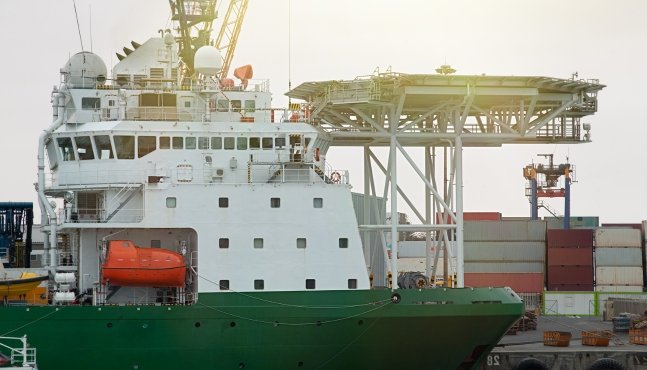
A short liner call leaves no room for surprises. These steps keep the delivery off the critical path.
Send the requisition at least several days before ETA, with the terminal and berth window. Mark must-have items so they are confirmed first.
If the ship also calls at Los Angeles, Long Beach or Seattle, tell us. We can put perishables at the last US port before the ocean passage and bulky or long-lead items at the port with the longest stay.
Send part numbers, serial numbers and nameplate photos. That avoids the wrong part arriving on a call where there is no time to swap it.
You receive the signed delivery note and invoice by email. Anything not supplied is listed so it can be ordered for the next port.
Vessel name, IMO, berth or terminal, ETA/ETD, agent details and the item list with quantities. For spares add maker, model and part number.
Every line priced, substitutes and long-lead items flagged, and delivery or launch charges confirmed up front.
Approve by email or purchase order. Suppliers and transport are booked the same day.
Stores arrive in the agreed slot at your Oakland terminal or San Francisco Bay anchorage with a delivery note matching your requisition.
Invoice and supporting documents for your accounts, audits and vessel records.
Sending the berth window and full rotation with the requisition is the biggest time saver on a container call. Every delivery is checked against the requisition before dispatch, and any shortage or substitution is shown on the delivery note before the master signs.
Alpha Ship Supplies coordinates provisions, deck and engine stores, technical supplies and spare parts for vessels at Port of Oakland terminals and San Francisco Bay anchorages, managed from our Houston headquarters.
No. Requisitions are quoted and coordinated by our Houston team, and delivery in Oakland is arranged for each call.
Yes, when the requisition arrives in time. We book the delivery slot with your agent and terminal and prepare gate paperwork before the ship arrives.
Ideally several days before ETA. Short berth windows leave little room for late changes, so early requests give the most options.
Yes. Deliveries to anchored vessels go by launch, arranged through the port agent, with cost and weather limits confirmed on the quotation.
Yes. Tell us the full rotation and we will suggest which items to take at Oakland and which to plan for Los Angeles, Long Beach or Seattle.
Yes. Provisions, ship stores and spares are quoted together and delivered in the same slot wherever the terminal allows.
Yes. Most of our Oakland requisitions come from container ships arriving from or returning to Asia, and provisions are planned around the passage ahead.
Where available, bonded stores for foreign-going vessels are arranged through licensed bonded suppliers, with paperwork coordinated through your agent.
Tell us or your agent as soon as it moves. We re-book the delivery slot and hold perishables in cold storage until the new time is confirmed.
Send the vessel name, terminal, berth window and requisition. You will get a line-by-line quotation and a delivery slot planned around your call.
Vessel calling at a U.S. port? Talk to our team or send your requisition for a quotation.
Call Now (979) 250-7486 Request for QuoteShip supplies at U.S. ports
Tell us about your vessel and port call. Our team will review your requirement and get back to you.
Prefer to talk?
(979) 250-7486
Request Ship Supplies
Share your vessel details and requirements in short.
Request received
Thank you. Our team will review your request and contact you.