
Ship Supplier and Ship Chandler Serving U.S. Ports
Lake Charles marine supply for vessels on the Calcasieu Ship Channel: provisions, deck and engine stores, safety equipment and marine spare parts on one quotation.
Alpha Ship Supplies coordinates marine supply for LNG carriers, product and chemical tankers, bulk carriers, Ro-Ro and breakbulk vessels calling at the Port of Lake Charles and the industrial terminals along the Calcasieu Ship Channel. Requisitions are quoted and managed by our Houston team, about two and a half hours west by road, and delivery is arranged for each call. You get one coordinator who knows Gulf Coast energy terminals, one consolidated quotation and a delivery planned around your cargo schedule.
Houston-coordinated | City Docks · Calcasieu Terminals · Cameron LNG area | One Quote, One Delivery

Coordinated from Houston, I-10 corridor
LNG, tanker and chemical docks
Provisions, stores and spares together
Prioritized by your vessel ETD
Southwest Louisiana has become one of the busiest LNG and petrochemical regions on the Gulf. The Calcasieu Ship Channel links the Gulf of Mexico to the city docks at Lake Charles, with LNG export facilities, refineries, chemical plants and bulk terminals along its banks. Each facility has its own access rules, delivery windows and safety requirements, and most of the ships calling there are on tight cargo schedules.
Ship managers and operators use Alpha Ship Supplies for Lake Charles marine supply because:
Send the vessel name, terminal, ETA and requisition. We confirm a delivery slot with your port agent.

The Calcasieu Ship Channel runs roughly 68 miles from the Gulf near Cameron, through Calcasieu Lake, to the Port of Lake Charles. Traffic includes LNG carriers at export terminals, crude and product tankers at refinery docks, chemical carriers at plant berths, and bulk, Ro-Ro and breakbulk ships at the port’s City Docks and Bulk Terminal. We support vessels at:
Tell us the exact dock with your requisition. It decides the route, gate paperwork and how much time the vessel will have to receive stores.
LNG carriers at export terminals typically have short alongside times and strict hazardous-area rules, so deliveries are compact and pre-cleared. Product and chemical tankers at refinery and plant docks need chemical-resistant PPE, correct jointing materials and cargo pump consumables. Bulk carriers loading petroleum coke, grain or other dry cargo at the port often stay longer, which suits bigger provision and maintenance orders. Ro-Ro and breakbulk vessels at the City Docks mix provisions with lashing and deck stores. Tugs and workboats on the channel need quick repeat orders. We read every requisition with the vessel type in mind, so the right materials and delivery method are chosen from the start.
Most Lake Charles requisitions combine several categories. We quote them on one document and deliver them together wherever the terminal allows.
Fresh, chilled, frozen and dry provisions planned for the next passage, packed by temperature and labeled by store room, plus linen, cleaning chemicals, galley items and slop chest goods. See provision and crew stores.
Mooring ropes, wires, shackles, paint, tools, gaskets, packing, filters and engine-room cleaning products, matched to IMPA references where available. See deck and engine stores.
PPE, chemical suits, firefighting consumables, lifesaving items and gas detection consumables for tanker and LNG operations, with expiry dates on the delivery note. See safety supplies.
OEM and approved equivalent spares for main and auxiliary engines, compressors, purifiers and cargo systems, identified by maker, model and part number. See marine spare parts.
Seals, impellers, bearings and valve parts for cargo, ballast and service pumps, quoted against maker references and nameplate data. See pumps.
Explosion-proof lighting, cable, electrical consumables and workshop equipment for running repairs between cargo operations. See electrical supplies.
Where the vessel lies decides how and when stores reach it. We plan each Lake Charles delivery dock by dock.
General cargo, Ro-Ro and breakbulk vessels at the City Docks usually allow flexible delivery times. Stores go by truck to the gate with paperwork prepared in advance and pallets labeled for crane loading.
LNG facilities run strict vehicle, escort and hazardous-area rules. We confirm what can enter, when and with which escort before dispatch, and keep deliveries compact to suit short alongside times.
Tankers at refinery and plant berths often have restricted delivery windows. We book the slot through your agent and flag restricted items early so nothing is refused at the gate.
Vessels waiting off the Calcasieu bar can take stores by launch, arranged through your agent. Launch cost and weather limits are confirmed on the quotation.
Every drop comes with a line-by-line delivery note, temperature notes for perishables and an emailed invoice with matching references.
Some LNG and chemical docks limit aerosols, chemicals or cylinders. Flag them on the requisition and we confirm acceptance before dispatch.
A failed pump seal, a gas detector out of calibration or a short provision count can become urgent during a short LNG or tanker call. Mark the requisition URGENT, include the ETD and dock, and we will tell you quickly what can realistically be sourced and delivered before sailing, and what is better planned for the next port. Requisitions can be sent through our form at any time and urgent ones are prioritized by ETD.
Most LNG carriers and tankers loading in Southwest Louisiana are owned or managed from Greece, Norway, Japan, South Korea, Singapore, the United Kingdom and other maritime centers. We work by email across time zones and send line-by-line quotations that superintendents abroad can approve quickly.
Provisions are planned around crew nationality and the length of the next passage, which is often a long voyage to Europe or Asia. Bonded stores for foreign-going vessels can be arranged where available, coordinated through your agent.
LNG and product cargoes from Southwest Louisiana often head to Europe or Asia on voyages of several weeks. We help plan provision quantities, shelf life and freezer space for the passage so the crew is well supplied without waste, and we can split orders between Lake Charles and an earlier Gulf port if storage is tight.
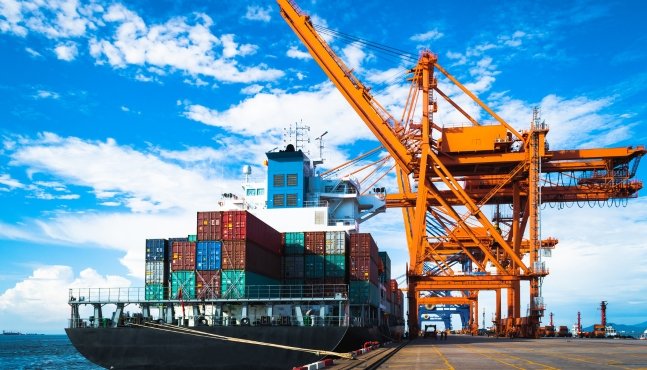
Short alongside times at LNG and refinery docks mean the stores delivery has to be planned before the ship arrives. A few steps keep it out of the critical path.
Send the requisition as soon as the nomination is confirmed, with the dock, ETA and agent contact. Mark must-have items so we can prioritize what can be confirmed in time.
Most terminals prefer deliveries before loading starts or during a planned pause. We agree the slot with your agent and hold perishables in cold storage if it moves.
Send part numbers, serial numbers and nameplate photos for pumps, compressors and gas detection items so the quotation matches the equipment on board.
You receive the signed delivery note and invoice with matching references. Anything not supplied is listed for the next port on the rotation.
Vessel name, IMO, berth or terminal, ETA/ETD, agent details and the item list with quantities. For spares add maker, model and part number.
Every line priced, substitutes and long-lead items flagged, and delivery or launch charges confirmed up front.
Approve by email or purchase order. Suppliers and transport are booked the same day.
Stores arrive in the agreed slot at your Lake Charles berth or Calcasieu terminal with a delivery note matching your requisition.
Invoice and supporting documents for your accounts, audits and vessel records.
Sending the dock and cargo window with the requisition is the biggest time saver in Lake Charles. Every delivery is checked against the requisition before dispatch, and any shortage or substitution is shown on the delivery note before the master signs.
Alpha Ship Supplies coordinates provisions, deck and engine stores, safety equipment and spare parts for vessels at Lake Charles and along the Calcasieu Ship Channel, managed from our Houston headquarters.
No. Requisitions are quoted and coordinated by our Houston team, and delivery in Lake Charles is arranged for each call.
Yes, subject to each terminal’s access and safety rules. We confirm the slot, escort needs and paperwork with the port agent before dispatch.
Lake Charles is roughly two and a half hours from Houston by road on I-10, so planned deliveries can usually be made within the vessel’s stay when the requisition arrives in good time.
Ideally several days before ETA. Energy terminals often have limited delivery windows, and technical spares need the most lead time.
Some LNG and chemical docks restrict aerosols, certain chemicals and gas cylinders. Flag them on the requisition and we confirm acceptance first.
Yes. Delivery to anchored vessels goes by launch, arranged through the port agent, with cost and weather limits confirmed on the quotation.
Yes. Provisions, ship stores and spares are quoted together and delivered on the same drop wherever the terminal allows.
Yes. Bulk carriers, Ro-Ro and breakbulk vessels at the City Docks and bulk terminals are supplied, often with larger orders because stays are longer.
Yes. The same team supplies Port Arthur, Beaumont and Houston, so fleets on Sabine and Calcasieu rotations keep one supplier.
Send the vessel name, dock, ETA, cargo window and requisition. You will get a line-by-line quotation and a terminal-safe delivery plan.
Vessel calling at a U.S. port? Talk to our team or send your requisition for a quotation.
Call Now (979) 250-7486 Request for QuoteShip supplies at U.S. ports
Tell us about your vessel and port call. Our team will review your requirement and get back to you.
Prefer to talk?
(979) 250-7486
Request Ship Supplies
Share your vessel details and requirements in short.
Request received
Thank you. Our team will review your request and contact you.